How to Schedule Substack Notes and Cross-Post to LinkedIn: Complete 2025 Guide
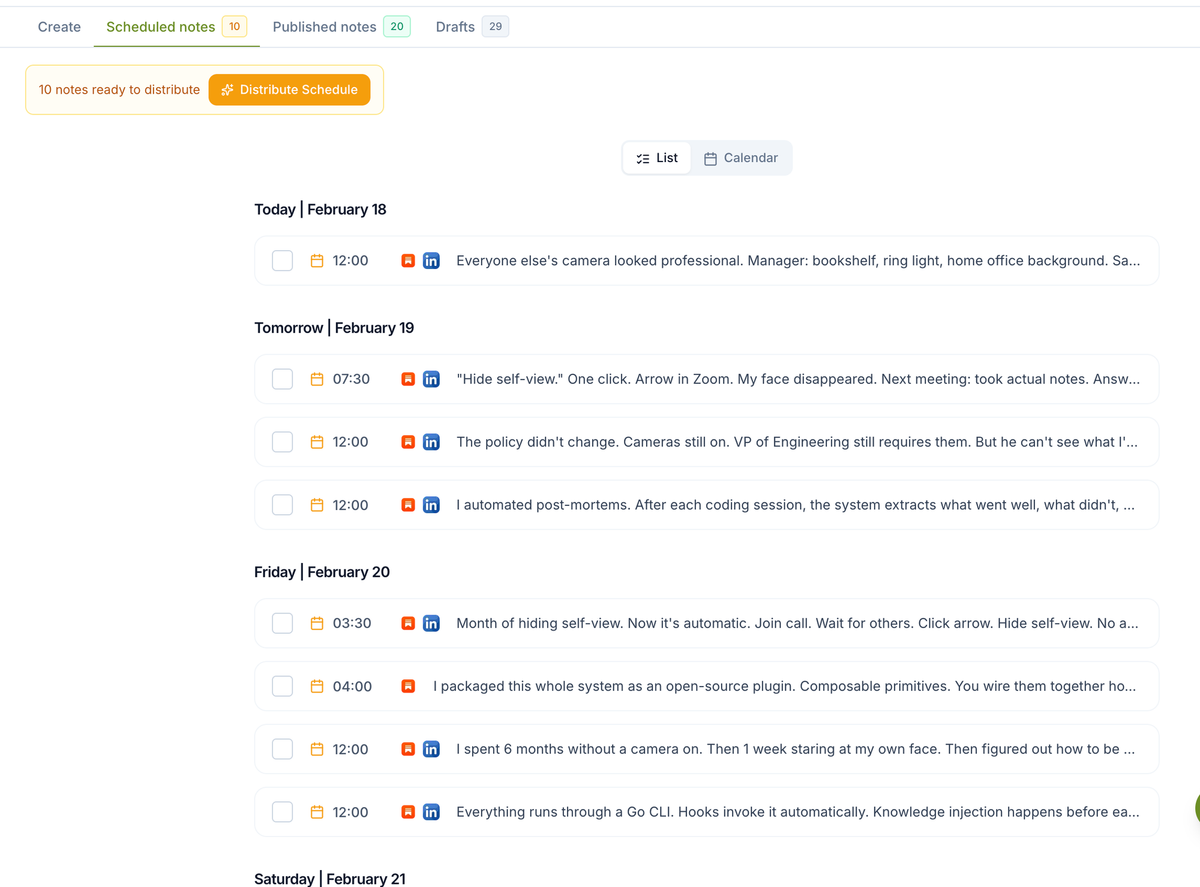
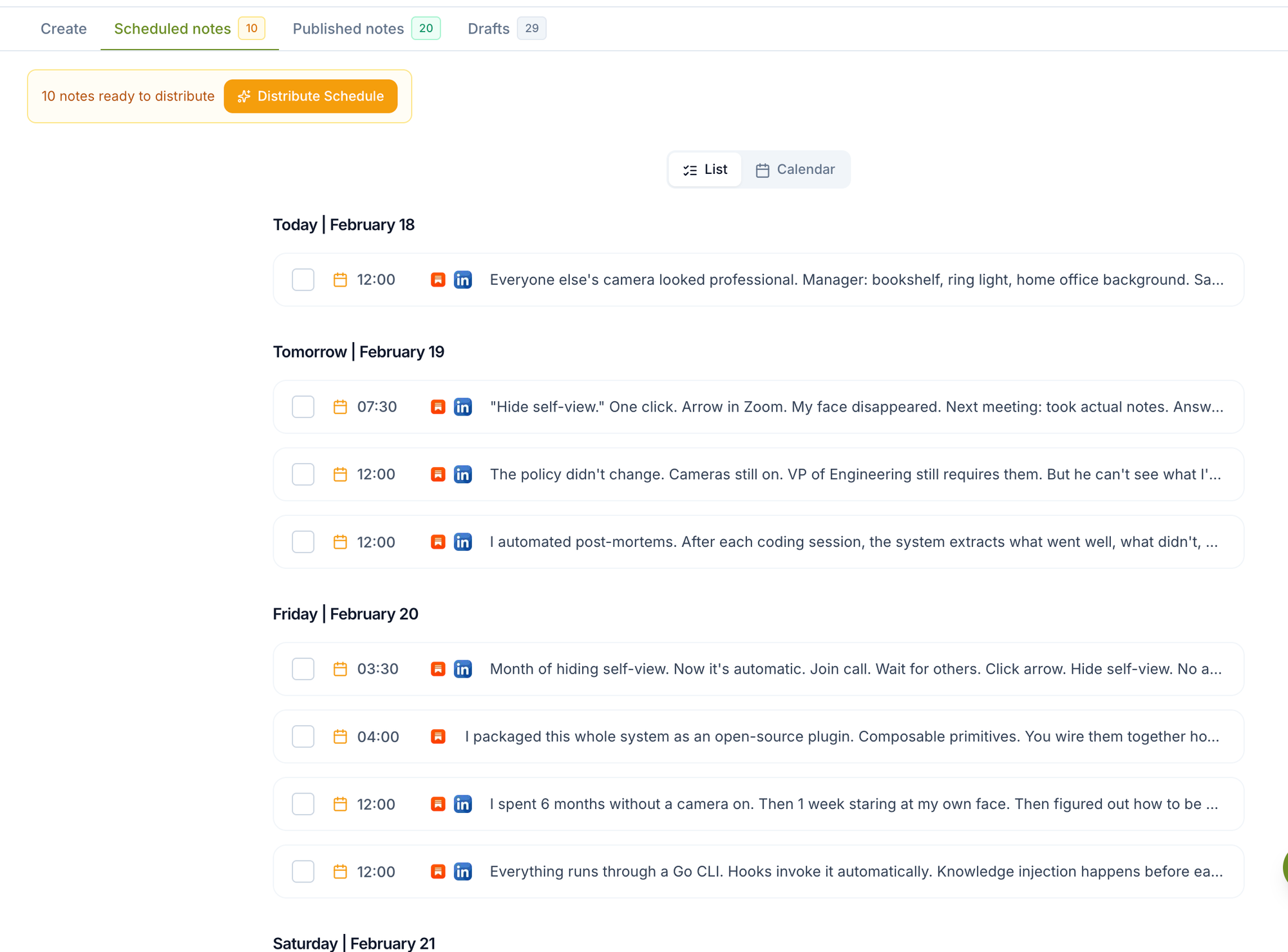
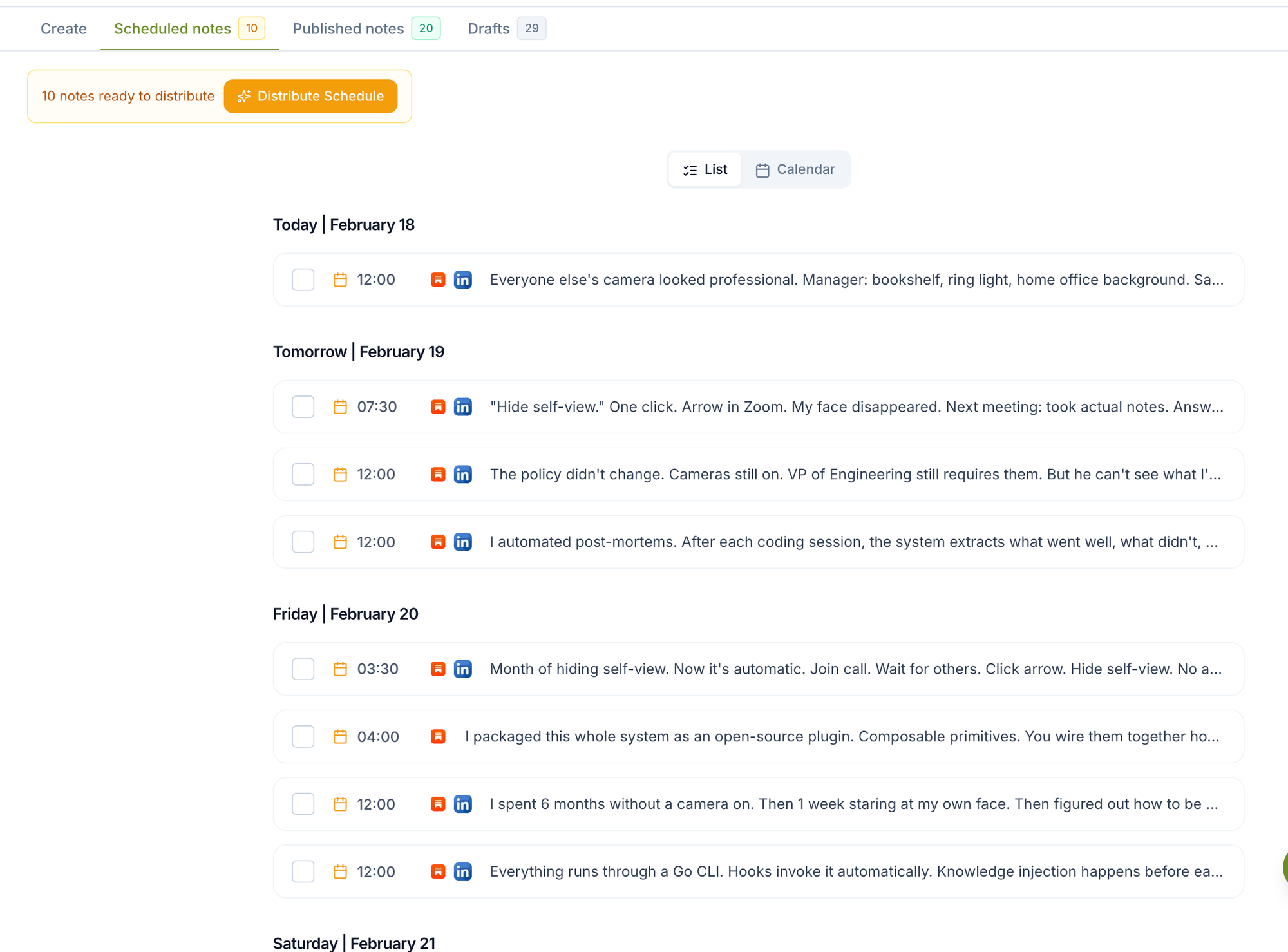
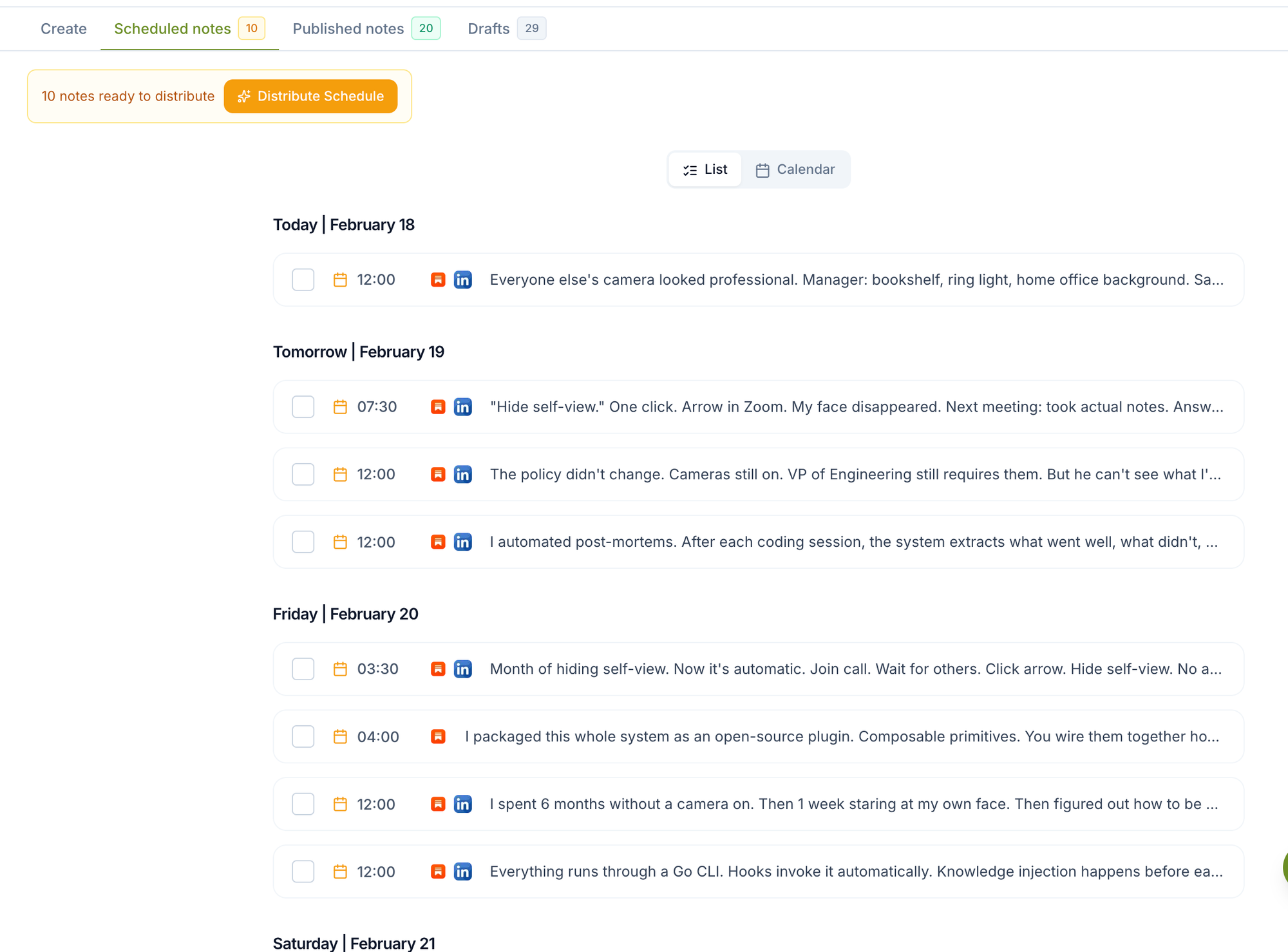
Scheduling Substack Notes in advance and cross-posting them to LinkedIn can save content creators 6-8 hours per week while increasing reach by 300-400%. Narrareach's Substack Notes scheduler enables writers to batch-create Notes weeks in advance, then automatically distribute them across LinkedIn, X, Bluesky, and Threads from a single calendar interface.
Why Schedule Substack Notes and Cross-Post to LinkedIn
Content creators who schedule and cross-post strategically see measurable growth across all platforms. According to HubSpot's 2024 Social Media Report, businesses that post consistently across multiple platforms generate 23% more leads than single-platform publishers.
The Time Investment Reality
Manual cross-posting creates significant overhead. Publishing one piece of content across four platforms (Substack, LinkedIn, X, Threads) takes approximately 15-20 minutes per post when done manually. For creators publishing 5 Notes per week, this equals 1.5-2 hours weekly just on distribution—before accounting for optimal timing research and platform-specific formatting.
Audience Reach Multiplication
LinkedIn's algorithm favors consistent posting, with creators who post 3-5 times weekly seeing 60% higher engagement rates according to LinkedIn's 2024 B2B Marketing Report. Cross-posting Substack Notes to LinkedIn exposes your content to professional networks that rarely discover Substack organically.
Revenue Impact for Newsletter Writers
Substack creators who actively cross-post to LinkedIn report 40-50% higher subscriber acquisition rates. This translates directly to revenue: a creator with 1,000 paid subscribers at $10/month who increases their subscriber base by 45% through cross-posting generates an additional $4,500 monthly recurring revenue.
The Complete Substack-to-LinkedIn Scheduling Workflow
The most effective approach follows a Substack-first strategy: create and schedule Notes in your primary platform, then automatically distribute to social channels. This maintains content consistency while maximizing reach efficiency.
Step 1: Plan Your Content Calendar (30 minutes weekly)
Begin each week by mapping out 5-7 Substack Notes. Focus on themes that translate well across platforms: industry insights, quick tips, behind-the-scenes content, and subscriber highlights. Use Narrareach to visualize your publishing schedule across all platforms simultaneously.
Step 2: Batch-Create Substack Notes (90 minutes weekly)
Write 5-7 Notes in a single focused session. Substack Notes perform best at 150-300 characters with clear value propositions. Include relevant hashtags and mentions, but keep the core message platform-agnostic for effective cross-posting.
Step 3: Schedule Notes with Cross-Platform Distribution (15 minutes weekly)
Upload your Notes to the Substack Notes scheduler and configure automatic cross-posting to LinkedIn, X, Bluesky, and Threads. Set optimal posting times based on your audience analytics: typically 9-11 AM EST for LinkedIn and 12-3 PM EST for X.
Step 4: Monitor Performance and Adjust (20 minutes weekly)
Review engagement metrics across all platforms weekly. LinkedIn posts with 3-5 relevant hashtags typically outperform those with more or fewer tags. Adjust your cross-posting strategy based on platform-specific performance data.
Platform-Specific Optimization Strategies
LinkedIn Cross-Posting Best Practices
LinkedIn's professional audience responds well to industry insights and thought leadership content. When you cross-post Substack to LinkedIn, include 2-3 professional hashtags and tag relevant industry connections. Posts with native LinkedIn formatting (line breaks, bullet points) generate 40% higher engagement than plain text transfers.
X (Twitter) Optimization
X favors real-time conversation and trending topics. Schedule Substack Notes to X during peak engagement hours (12-3 PM EST) and include 1-2 trending hashtags when relevant. Thread your longer Notes into 2-3 connected posts for better visibility.
Bluesky and Threads Considerations
These emerging platforms reward authentic, conversational content. Cross-post your more casual, behind-the-scenes Substack Notes to build community engagement. Both platforms currently have less algorithmic filtering, making consistent posting particularly valuable for organic reach.
Competitor Analysis: Substack Scheduling Tools
Several tools offer Substack scheduling capabilities, but they differ significantly in cross-posting functionality and workflow efficiency.
Native Substack Scheduling
Pros: Direct integration, no third-party dependencies, familiar interface
Cons: No cross-posting capabilities, limited bulk scheduling, no multi-platform analytics
Best for: Writers focused solely on Substack growth without social media expansion
Buffer and Hootsuite
Pros: Established social media scheduling, comprehensive analytics, team collaboration features
Cons: No native Substack integration, requires manual content duplication, expensive for individual creators ($15-50/month)
Best for: Large teams managing multiple brands across social platforms
Narrareach
Pros: Native Substack Notes scheduling, automatic cross-posting to 4 platforms, unified analytics dashboard, creator-focused pricing
Cons: Newer platform with smaller user base, focuses specifically on Substack creators
Best for: Substack writers who want to maximize reach through strategic cross-posting without complex social media management overhead
Time-Saving Mathematics: Manual vs. Automated
The time savings from automated scheduling and cross-posting are substantial when calculated across a typical month.
Manual Cross-Posting Time Investment
Manual workflow: 20 Notes per month × 4 platforms × 5 minutes per post = 400 minutes (6.7 hours monthly)
Additional time for optimal scheduling research: 30 minutes weekly × 4 weeks = 120 minutes
Total manual time investment: 520 minutes (8.7 hours monthly)
Automated Workflow Time Investment
Initial setup and content planning: 60 minutes monthly
Batch scheduling in Narrareach integrations: 40 minutes monthly
Performance monitoring and optimization: 30 minutes monthly
Total automated time investment: 130 minutes (2.2 hours monthly)
Net Time Savings
Monthly time savings: 8.7 hours - 2.2 hours = 6.5 hours
Annual time savings: 6.5 hours × 12 months = 78 hours
This represents nearly two full work weeks annually that can be redirected toward content creation, subscriber engagement, or revenue-generating activities.
Advanced Cross-Posting Strategies
Content Adaptation for Platform Audiences
While cross-posting saves time, slight platform-specific adaptations increase engagement. LinkedIn audiences prefer professional insights and industry commentary, while X users engage more with timely observations and conversational content. Configure your cross-posting tool to include platform-specific hashtags and mentions automatically.
Timing Optimization Across Time Zones
Global audiences require strategic timing considerations. Schedule Substack Notes for your primary audience timezone, then stagger cross-posts to LinkedIn and X for secondary markets. European audiences typically engage with LinkedIn content 3-4 hours before US East Coast peak times.
Engagement Amplification Techniques
Cross-posted content performs better when you actively engage across platforms within the first hour of publication. Set calendar reminders to respond to comments and share additional context on each platform, treating cross-posts as conversation starters rather than one-way broadcasts.
Getting Started: Your First Week with Automated Cross-Posting
Implementing an effective Substack Notes scheduling and cross-posting workflow requires systematic setup and testing. This day-by-day plan ensures smooth transition from manual to automated publishing.
Day 1: Account Setup and Integration
Create your scheduling account and connect all platforms (Substack, LinkedIn, X, Bluesky, Threads). Test posting permissions and verify that cross-posting formatting appears correctly on each platform. This initial setup takes approximately 45 minutes but prevents publishing issues later.
Day 2: Content Planning and Calendar Creation
Map out your first week of Substack Notes with cross-posting in mind. Plan 5-7 Notes that work well across all platforms: industry insights, subscriber highlights, behind-the-scenes content, and valuable tips. Avoid platform-specific references that won't translate effectively.
Day 3: Batch Content Creation
Write your first week of Substack Notes in a focused 90-minute session. Keep Notes between 150-300 characters for optimal cross-platform performance. Include 2-3 relevant hashtags that work across LinkedIn and X, avoiding platform-specific jargon.
Day 4: Schedule and Cross-Post Configuration
Upload your Notes to your scheduling platform and configure cross-posting times. LinkedIn performs best during business hours (9 AM-5 PM EST), while X sees higher engagement during lunch hours and early evening (12-3 PM, 6-8 PM EST). Stagger posts by 15-30 minutes across platforms to avoid appearing automated.
Day 5: First Automated Posts Go Live
Monitor your first automated cross-posts closely. Check formatting, hashtag performance, and initial engagement across all platforms. Make note of any platform-specific adjustments needed for future posts.
Day 6: Engagement and Community Building
Actively engage with comments and shares across all platforms. Cross-posted content requires platform-specific engagement strategies: professional responses on LinkedIn, conversational replies on X, and community-building interactions on Bluesky and Threads.
Day 7: Performance Review and Optimization
Analyze your first week's performance across all platforms. Identify which content types performed best on each platform and adjust your content planning accordingly. Most creators see 20-30% higher engagement within the first month of consistent cross-posting.
Measuring Success Across Platforms
Key Performance Indicators for Cross-Posted Content
Track engagement rates, click-through rates to your Substack, and new subscriber acquisitions from each platform. LinkedIn typically drives higher-quality traffic with longer session durations, while X generates more immediate engagement and shares.
Attribution and Conversion Tracking
Use platform-specific UTM parameters in your Substack links to track which cross-posted content drives the most valuable traffic. LinkedIn-sourced traffic typically converts to paid subscriptions at 15-20% higher rates than X traffic, making it particularly valuable for monetized newsletters.
Long-Term Growth Metrics
Monitor subscriber growth velocity and engagement quality over 3-6 month periods. Creators who consistently cross-post typically see compound growth effects, with each platform reinforcing discovery and engagement on others.
Troubleshooting Common Cross-Posting Issues
Platform-Specific Formatting Problems
Different platforms handle line breaks, hashtags, and mentions differently. Test your cross-posting setup with various content types to identify formatting issues before they affect your audience. Most scheduling tools allow platform-specific customization to address these differences.
Engagement Timing Mismatches
Global audiences create timing challenges for optimal engagement. Consider scheduling the same content at different times for different platforms based on where your audience is most active. LinkedIn audiences often engage during business hours, while X users are more active during commute times and evenings.
Content Saturation and Audience Overlap
Some audience members follow you across multiple platforms, potentially seeing duplicate content. Vary your posting approach slightly for each platform or space out cross-posts by several hours to reduce perceived repetition.
Advanced Automation and Scaling Strategies
Content Series and Campaign Coordination
Plan multi-part content series that work across all platforms simultaneously. Schedule coordinated campaigns that build momentum across your entire audience ecosystem, using each platform's strengths to support overall narrative development.
Seasonal and Event-Based Scheduling
Prepare content calendars around industry events, holidays, and seasonal trends. Cross-posting allows you to maximize the impact of timely content by ensuring it reaches audiences across all your platforms simultaneously.
Community Building Across Platforms
Use cross-posting to build interconnected communities rather than isolated platform audiences. Encourage cross-platform engagement by referencing conversations happening on other platforms and creating content that spans multiple channels.
Cost-Benefit Analysis of Automated Cross-Posting
Investment in automated cross-posting tools pays for itself quickly through time savings and increased reach. Narrareach pricing starts at $29/month, which equals the value of approximately 2 hours of creator time monthly. Given that automated cross-posting saves 6-8 hours weekly, the return on investment exceeds 1000% for most creators.
Revenue Impact Calculations
Creators who cross-post consistently typically see 40-60% increases in subscriber acquisition rates. For a creator earning $5,000 monthly from 500 paid subscribers, a 50% growth rate translates to $2,500 additional monthly recurring revenue within 6-12 months.
Opportunity Cost of Manual Management
Time spent on manual cross-posting could be invested in content creation, subscriber engagement, or revenue-generating activities. The 78 hours saved annually through automation could produce 15-20 additional high-quality articles or enable significant community engagement initiatives.
Scheduling Substack Notes and cross-posting to LinkedIn, X, and other platforms transforms content distribution from a time-consuming manual process into an efficient growth engine. The combination of consistent publishing, strategic timing, and multi-platform reach creates compound growth effects that benefit both audience development and revenue generation.
Ready to automate your Substack cross-posting workflow? Start with Narrareach to schedule your first week of Notes and experience the time-saving benefits of automated cross-platform distribution.
Visual Walkthrough