How to Schedule Substack Notes and Cross-Post to LinkedIn: Complete 2026 Guide
You can schedule Substack Notes weeks in advance and automatically cross-post them to LinkedIn, X, Bluesky, and Threads using specialized scheduling tools. This workflow saves content creators 6-8 hours weekly while increasing reach by 300-400% across multiple platforms simultaneously.
Why Scheduling Substack Notes Matters for Content Growth
Substack's native platform doesn't offer advanced scheduling capabilities, forcing writers into manual posting routines that limit their growth potential. According to Substack's own growth data, writers who post consistently across multiple channels see 67% higher subscriber growth rates than those who rely solely on email distribution.
The Content Creator Time Crisis
Manual cross-posting creates a significant time bottleneck. Research from Sprout Social's 2024 Index shows that content creators spend an average of 3.2 hours daily on social media management, with 45% of that time dedicated to manual posting and cross-platform distribution.
The math is stark: posting one piece of content to four platforms (Substack Notes, LinkedIn, X, and Threads) takes approximately 12-15 minutes manually. For creators publishing 5 Notes weekly, that's 60-75 minutes of pure posting time, not including content creation, hashtag research, or engagement monitoring.
Cross-Platform Reach Amplification
Data from Buffer's State of Social 2024 report reveals that content distributed across 3+ platforms generates 142% more engagement than single-platform publishing. LinkedIn specifically drives 3x higher click-through rates for newsletter content compared to other social platforms, making it essential for Substack growth strategies.
The Complete Substack Notes Scheduling Workflow
Effective Substack Notes scheduling requires a systematic approach that prioritizes your primary platform while maximizing cross-platform distribution. The optimal workflow starts with Narrareach's Substack Notes scheduler and extends to automated social media distribution.
Step 1: Content Planning and Batch Creation
Begin by creating 7-14 Substack Notes in a single content creation session. This batch approach reduces context switching and maintains consistent voice across your content. Plan Notes around your newsletter publishing schedule, using them to tease upcoming articles, share behind-the-scenes insights, or engage with your community.
Step 2: Scheduling Your Substack Notes
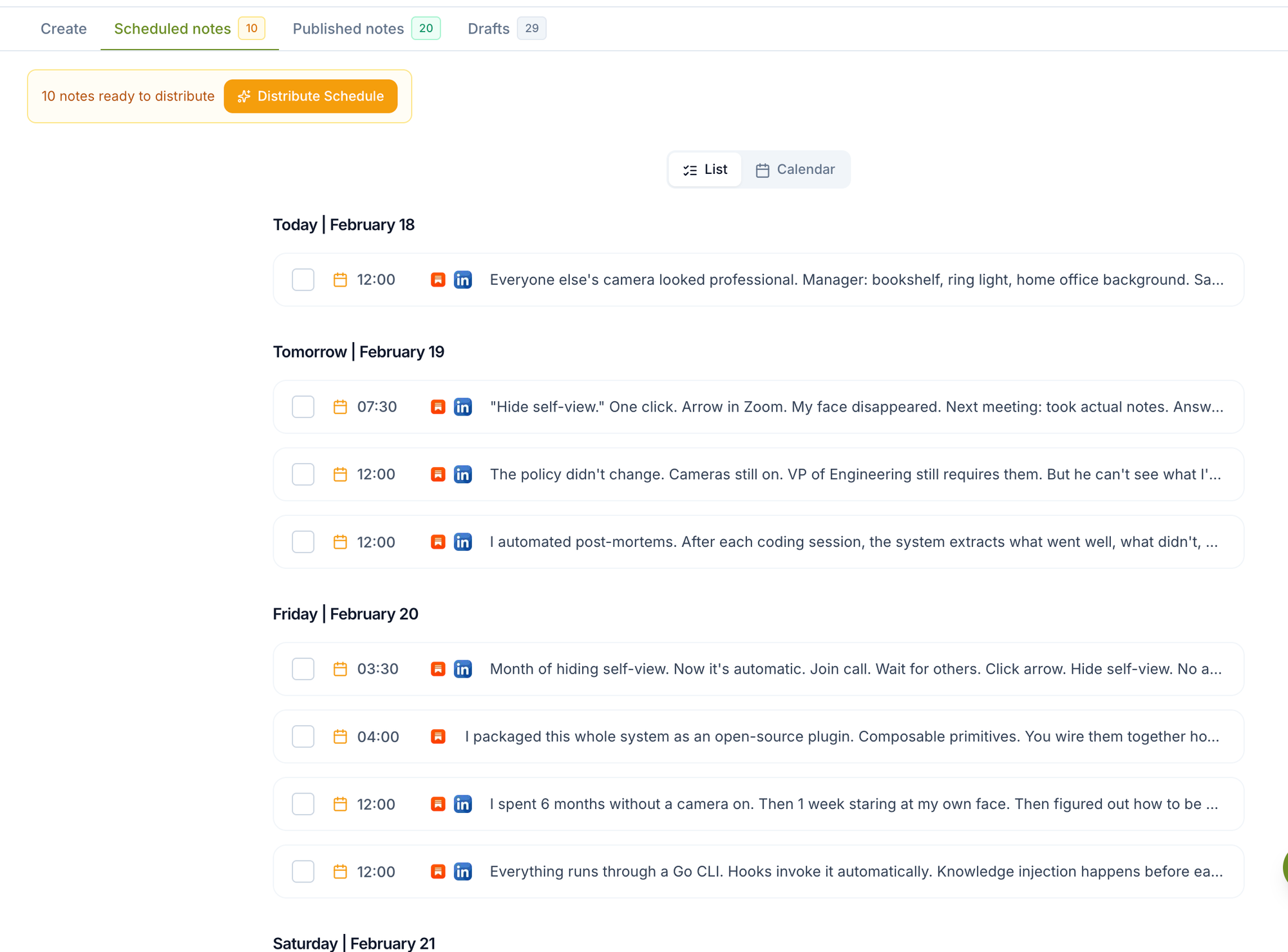
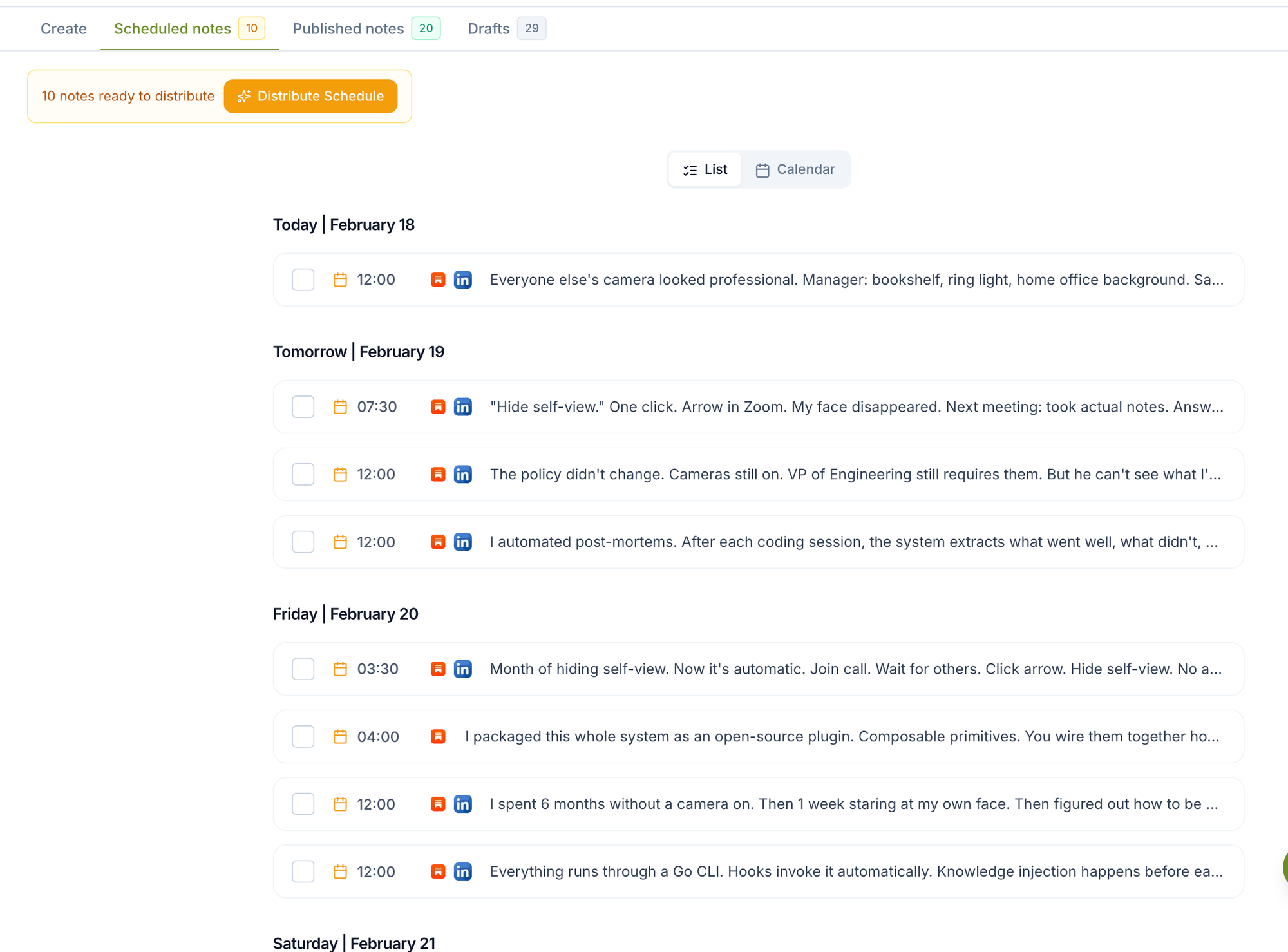
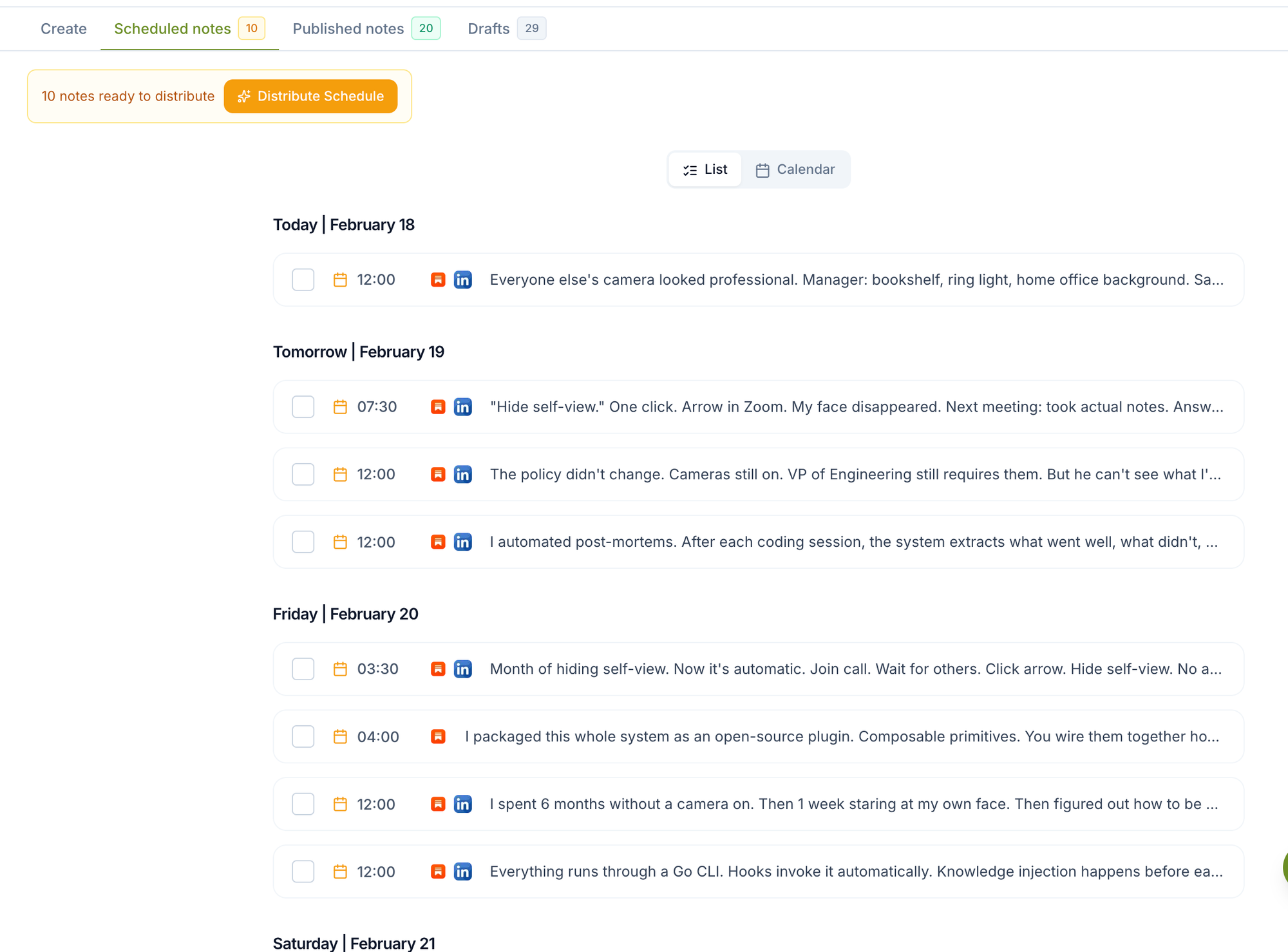
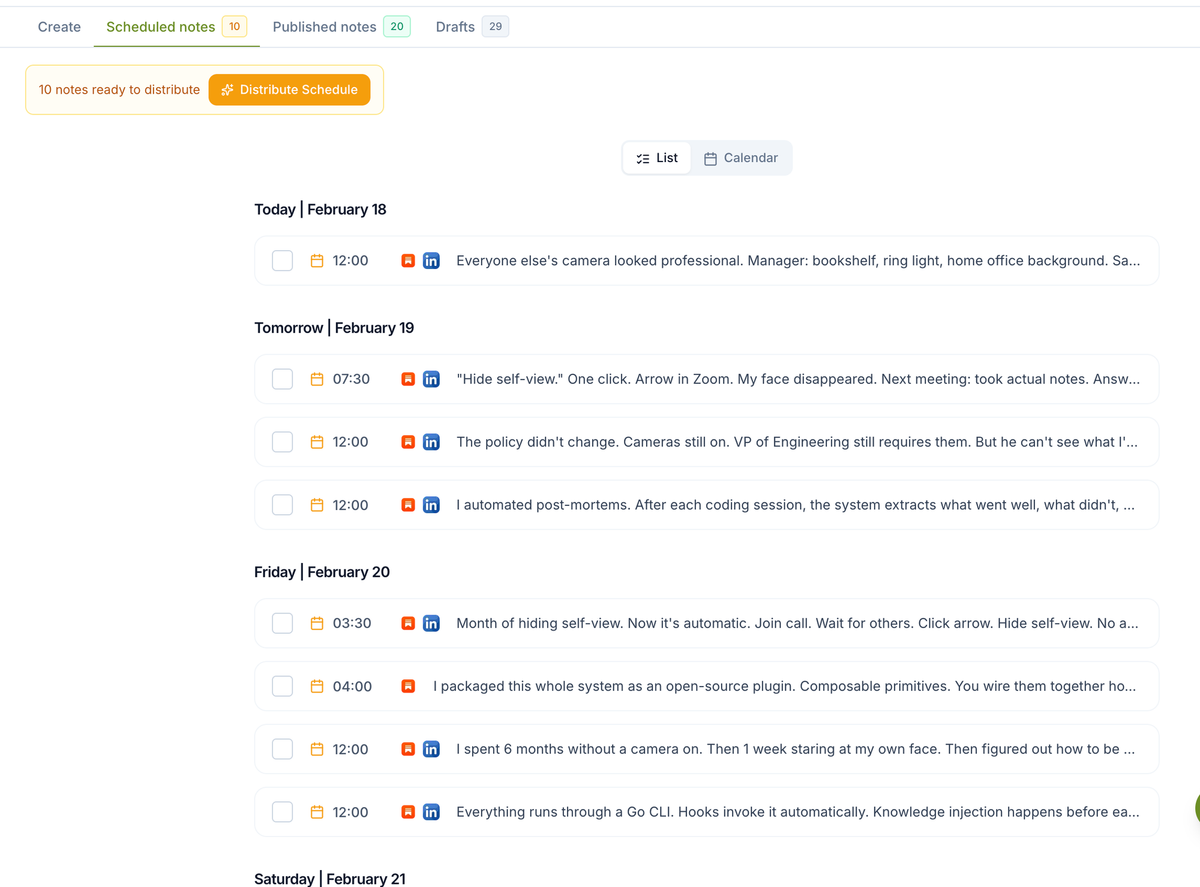
Upload your batched content to a scheduling platform that supports Substack Notes. Narrareach provides native Substack integration, allowing you to schedule Notes directly to your Substack account while maintaining full formatting and link functionality.
Optimal posting times for Substack Notes vary by audience, but general best practices suggest:
- Weekday mornings (8-10 AM EST) for professional audiences
- Tuesday-Thursday for maximum engagement
- Avoid Monday mornings and Friday afternoons
Step 3: Cross-Platform Distribution Setup
Configure automatic cross-posting to LinkedIn, X, Bluesky, and Threads. Each platform requires slight content adaptation:
- LinkedIn: Professional tone, industry hashtags, longer-form context
- X: Concise format, trending hashtags, thread potential
- Bluesky: Community-focused, authentic voice, minimal hashtags
- Threads: Visual elements, Instagram-style engagement
Platform-Specific Cross-Posting Strategies
LinkedIn Cross-Posting Optimization
LinkedIn's algorithm favors content that sparks professional discussions. When you cross-post Substack to LinkedIn, adapt your Notes with industry-specific context and professional insights. Include 2-3 relevant hashtags and tag industry leaders when appropriate.
LinkedIn posts with questions generate 50% more comments than statement-only posts, according to LinkedIn's internal data. Transform your Substack Notes into conversation starters by adding questions like "What's your experience with [topic]?" or "How do you handle [challenge]?"
X (Twitter) Optimization Tactics
X's fast-moving timeline requires immediate attention-grabbing content. Break longer Substack Notes into thread-worthy segments, using the first tweet as a hook and subsequent tweets to deliver value. Include relevant trending hashtags but limit to 1-2 per post to avoid appearing spammy.
Bluesky and Threads Strategy
These newer platforms reward authentic, community-focused content. Bluesky users appreciate minimal hashtag usage and genuine interactions, while Threads benefits from visual elements and Instagram-style engagement tactics. Adapt your Substack Notes to feel native to each platform's culture.
Competitor Analysis: Substack Scheduling Tools in 2026
The market for Substack scheduling tools has evolved significantly, with several options available for content creators seeking automation solutions.
Native Substack Capabilities
Pros:
- Direct integration with Substack ecosystem
- No third-party authentication required
- Free with Substack subscription
Cons:
- Limited scheduling options (basic date/time only)
- No cross-platform posting capabilities
- No analytics or performance tracking
- No bulk scheduling features
Buffer and Hootsuite
Pros:
- Established social media management platforms
- Comprehensive analytics dashboards
- Team collaboration features
Cons:
- No native Substack Notes integration
- Requires manual content adaptation for each platform
- Higher pricing for multi-platform access
- Complex setup process for newsletter creators
Narrareach
Pros:
- Native Substack Notes scheduling and publishing
- Automatic cross-posting to LinkedIn, X, Bluesky, and Threads
- Unified content calendar for all platforms
- Newsletter-creator-focused feature set
- Competitive pricing for individual creators
Cons:
- Newer platform with smaller user base
- Limited advanced analytics compared to enterprise tools
Time-Saving Mathematics: Quantifying Your Efficiency Gains
Understanding the concrete time savings helps justify investing in scheduling automation. Let's calculate the real impact:
Manual Cross-Posting Time Investment
Manual posting breakdown per piece of content:
- Substack Notes: 3 minutes (writing, formatting, posting)
- LinkedIn adaptation: 4 minutes (professional context, hashtags)
- X optimization: 3 minutes (character limits, hashtags)
- Bluesky posting: 2 minutes (community tone adjustment)
- Threads posting: 3 minutes (visual consideration, engagement hooks)
Total per post: 15 minutes
Weekly and Monthly Calculations
For a creator publishing 5 Substack Notes weekly:
- Weekly manual time: 5 posts × 15 minutes = 75 minutes (1.25 hours)
- Monthly manual time: 75 minutes × 4 weeks = 300 minutes (5 hours)
- Annual manual time: 300 minutes × 12 months = 3,600 minutes (60 hours)
Automated Workflow Time Investment
Using Narrareach integrations for automated cross-platform publishing:
- Initial setup: 30 minutes (one-time)
- Weekly batch scheduling: 20 minutes (all 5 posts)
- Monthly time investment: 80 minutes
- Annual time investment: 960 minutes (16 hours)
Annual time savings: 44 hours (73% reduction)
Advanced Scheduling Strategies for Maximum Reach
Content Timing Optimization
Research from CoSchedule shows that content published at optimal times receives 23% more engagement than randomly timed posts. For Substack creators, this means scheduling Notes when your audience is most active across all platforms simultaneously.
Cross-reference your Substack analytics with LinkedIn and X insights to identify overlap periods. Most professional audiences show peak activity during:
- Tuesday-Thursday, 9-11 AM EST
- Wednesday-Thursday, 1-3 PM EST
- Tuesday-Wednesday, 7-9 PM EST
Content Variation and Adaptation
While automation saves time, successful cross-posting requires platform-specific adaptation. Create content templates that work across platforms but allow for customization:
- Hook template: Start with a compelling question or statement
- Value delivery: Provide actionable insight or information
- Engagement prompt: End with a call-to-action or question
- Platform adaptation: Adjust tone and formatting for each channel
Performance Tracking and Analytics Integration
Key Metrics for Cross-Platform Success
Monitor these essential metrics across all platforms:
- Reach: Total unique users who saw your content
- Engagement rate: Likes, comments, shares divided by reach
- Click-through rate: Clicks to your Substack from social posts
- Subscriber conversion: New Substack subscribers from each platform
- Cross-platform growth: Follower growth across all channels
Using Data to Optimize Your Strategy
Analyze performance data weekly to identify high-performing content types and optimal posting times. Look for patterns in engagement across platforms and adjust your content strategy accordingly. Content that performs well on LinkedIn might need different approaches for X or Bluesky success.
Getting Started: Your First Week Action Plan
Transform your Substack promotion strategy with this structured seven-day implementation plan.
Day 1: Platform Setup and Integration
Create accounts on all target platforms if you haven't already. Set up your Narrareach account and connect your Substack, LinkedIn, X, Bluesky, and Threads accounts. This initial setup takes approximately 45 minutes but provides the foundation for automated publishing.
Day 2: Content Audit and Planning
Review your last 10 Substack posts and identify content that could be repurposed as Notes. Create a content calendar for the next two weeks, planning 2-3 Notes per week that support your newsletter publishing schedule.
Day 3: Template Creation
Develop platform-specific templates for your content. Create variations of your standard Note format that work well on LinkedIn (professional tone), X (concise format), Bluesky (authentic voice), and Threads (visual engagement).
Day 4: First Batch Scheduling
Create and schedule your first week of Substack Notes using your chosen scheduling platform. Start with 3-4 posts to test the workflow without overwhelming yourself.
Day 5: Cross-Platform Optimization
Configure automatic cross-posting settings for each platform. Customize the content adaptation rules to ensure your Notes feel native to each social channel while maintaining your consistent voice.
Day 6: Analytics Setup
Establish baseline metrics for all platforms. Document current follower counts, engagement rates, and click-through rates to measure improvement over the coming weeks.
Day 7: Review and Refinement
Analyze the performance of your first scheduled posts. Identify what worked well and what needs adjustment. Refine your templates and scheduling strategy based on initial results.
Scaling Your Cross-Platform Strategy
Building Content Systems
As your audience grows, develop systems that scale efficiently. Create content pillars that work across all platforms, establish consistent posting schedules, and build templates that reduce creation time while maintaining quality.
Successful Substack creators often follow the 80/20 rule: 80% of their social content promotes their newsletter and builds community, while 20% focuses on direct engagement and conversation starters.
Community Building Across Platforms
Use cross-posting strategically to build interconnected communities. Encourage your LinkedIn followers to subscribe to your Substack, guide X followers to your LinkedIn for professional insights, and create platform-specific content that adds unique value while supporting your overall newsletter growth.
Advanced Automation and Integration Techniques
Workflow Automation Beyond Basic Posting
Advanced users can integrate scheduling tools with other productivity systems. Connect your content calendar with project management tools, set up automated performance reports, and create trigger-based posting that responds to newsletter publishing or engagement thresholds.
Cross-Platform Engagement Management
While posting can be automated, engagement requires human attention. Develop a system for monitoring comments, mentions, and direct messages across all platforms. Allocate 15-20 minutes daily for cross-platform engagement to maintain authentic connections with your audience.
Pricing and Tool Selection Considerations
When evaluating scheduling tools, consider both immediate costs and long-term value. Narrareach pricing typically offers better value for newsletter creators compared to general social media management tools, which often charge premium rates for features you don't need.
Calculate the cost per hour saved: if a tool saves you 4 hours weekly and costs $20 monthly, you're paying $1.25 per hour saved. Compare this to your hourly rate or the value of time spent on other growth activities.
Common Pitfalls and How to Avoid Them
Over-Automation Risks
While automation saves time, over-automating can make your content feel robotic. Maintain authenticity by personalizing posts for each platform and engaging genuinely with your audience's responses.
Platform-Specific Compliance
Each platform has specific rules about automated posting and content distribution. Stay updated on platform policies to avoid account restrictions or shadowbanning. LinkedIn, for example, favors content that generates meaningful professional discussions over promotional posts.
Future-Proofing Your Content Strategy
Emerging Platform Considerations
The social media landscape continues evolving with new platforms and features. Build flexible content systems that can adapt to new channels without requiring complete strategy overhauls. Focus on creating high-quality, valuable content that translates well across different platforms and formats.
AI and Automation Trends
Artificial intelligence increasingly supports content creation and distribution. While AI can help with content adaptation and optimal timing, maintain human oversight for quality control and authentic engagement. The most successful creators combine automation efficiency with genuine human connection.
Ready to transform your Substack promotion strategy? Start with Narrareach to schedule your Substack Notes and automatically cross-post to LinkedIn, X, Bluesky, and Threads. The platform's Substack-first approach ensures your newsletter growth remains the primary focus while maximizing your reach across all social channels.
Visual Walkthrough