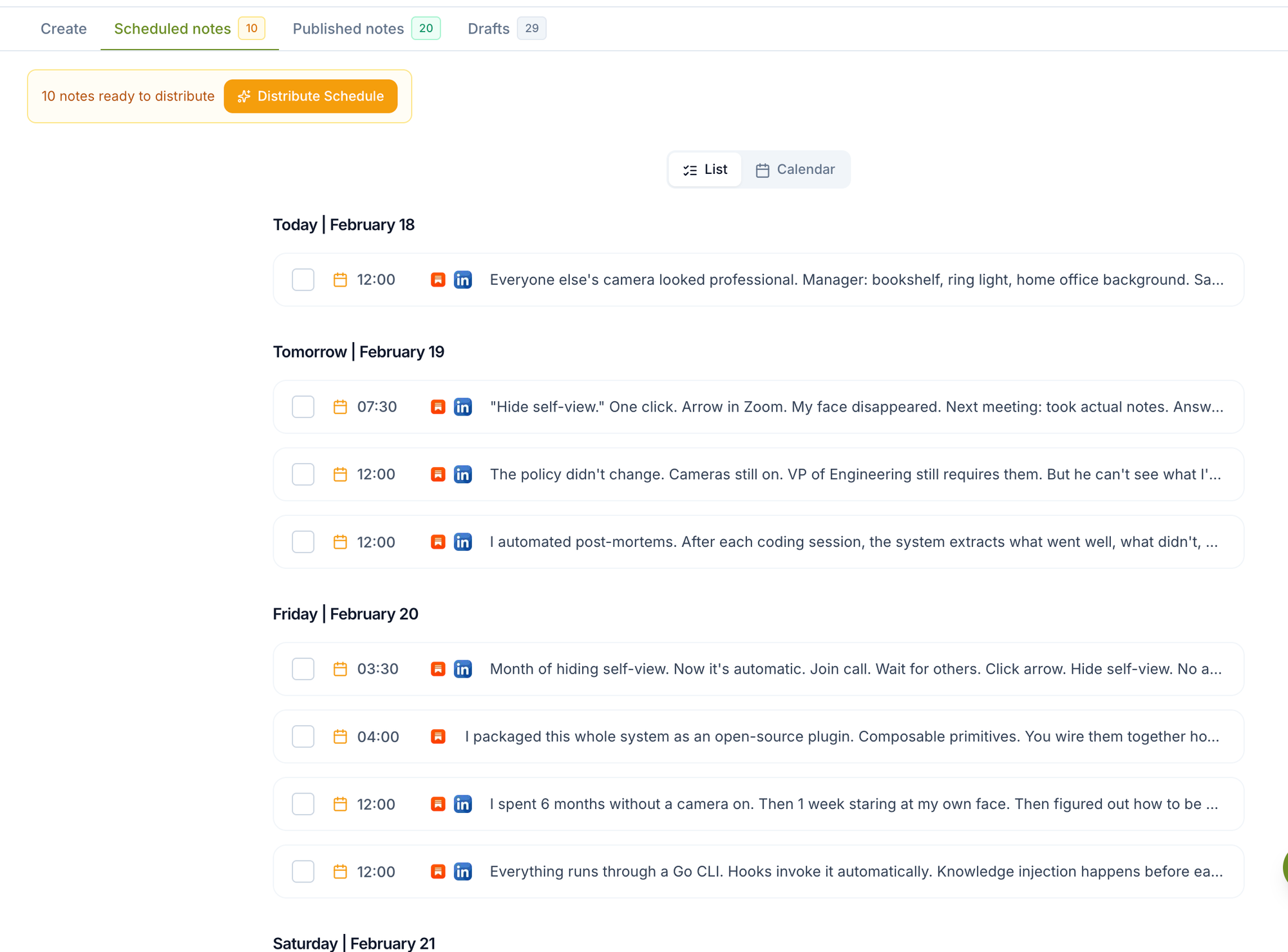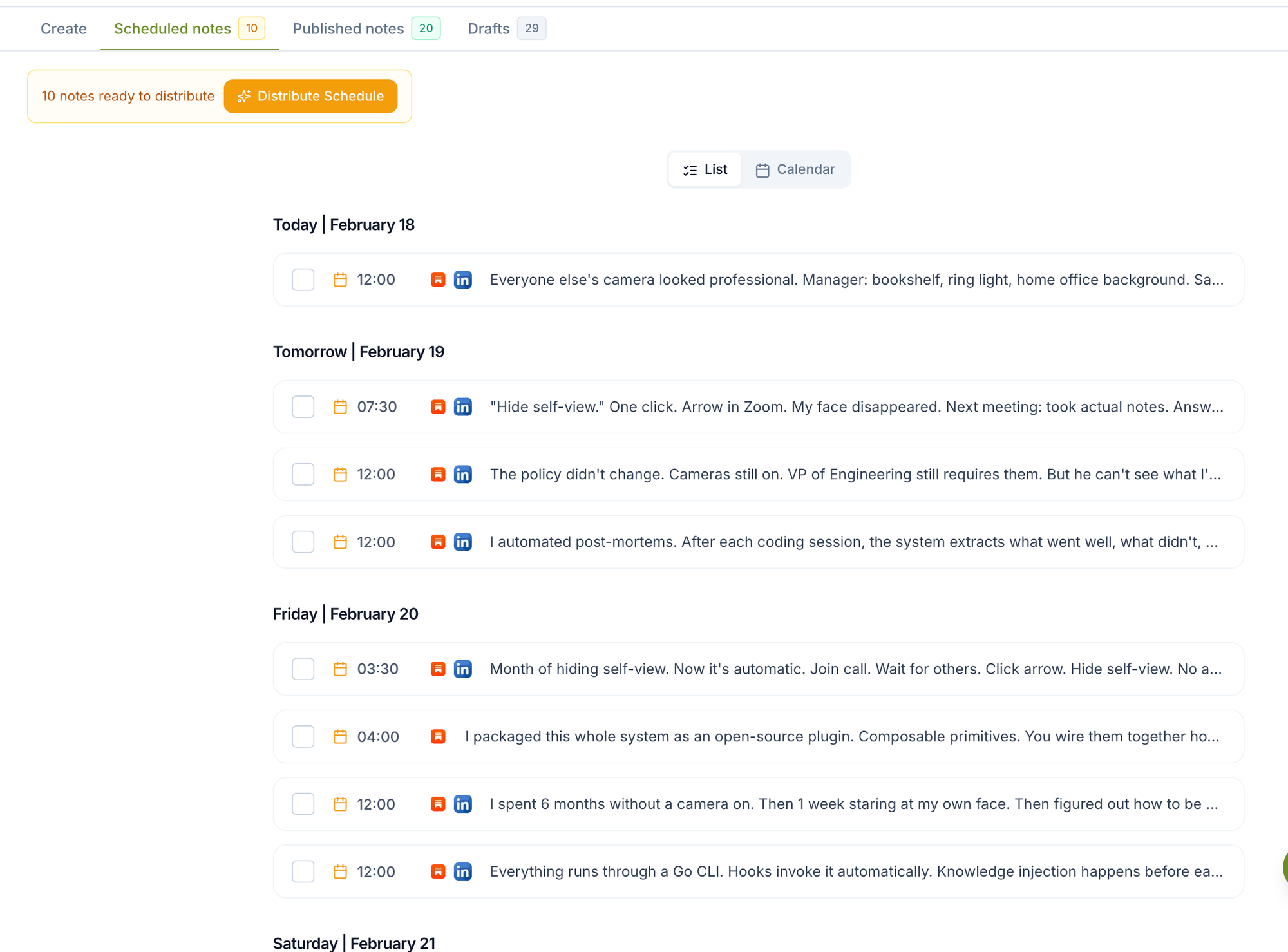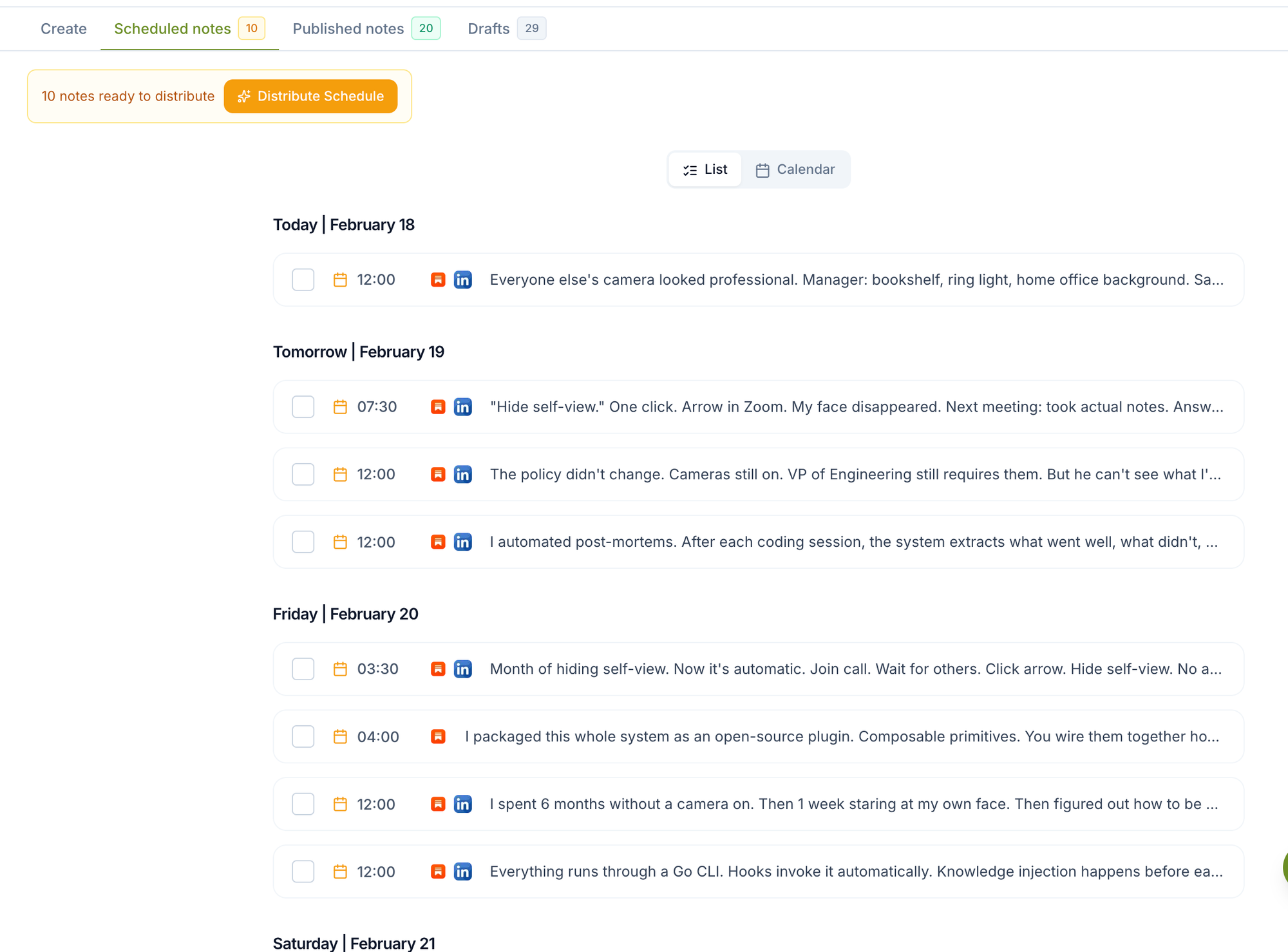
How to Schedule Substack Notes and Cross-Post to LinkedIn (2026 Guide)
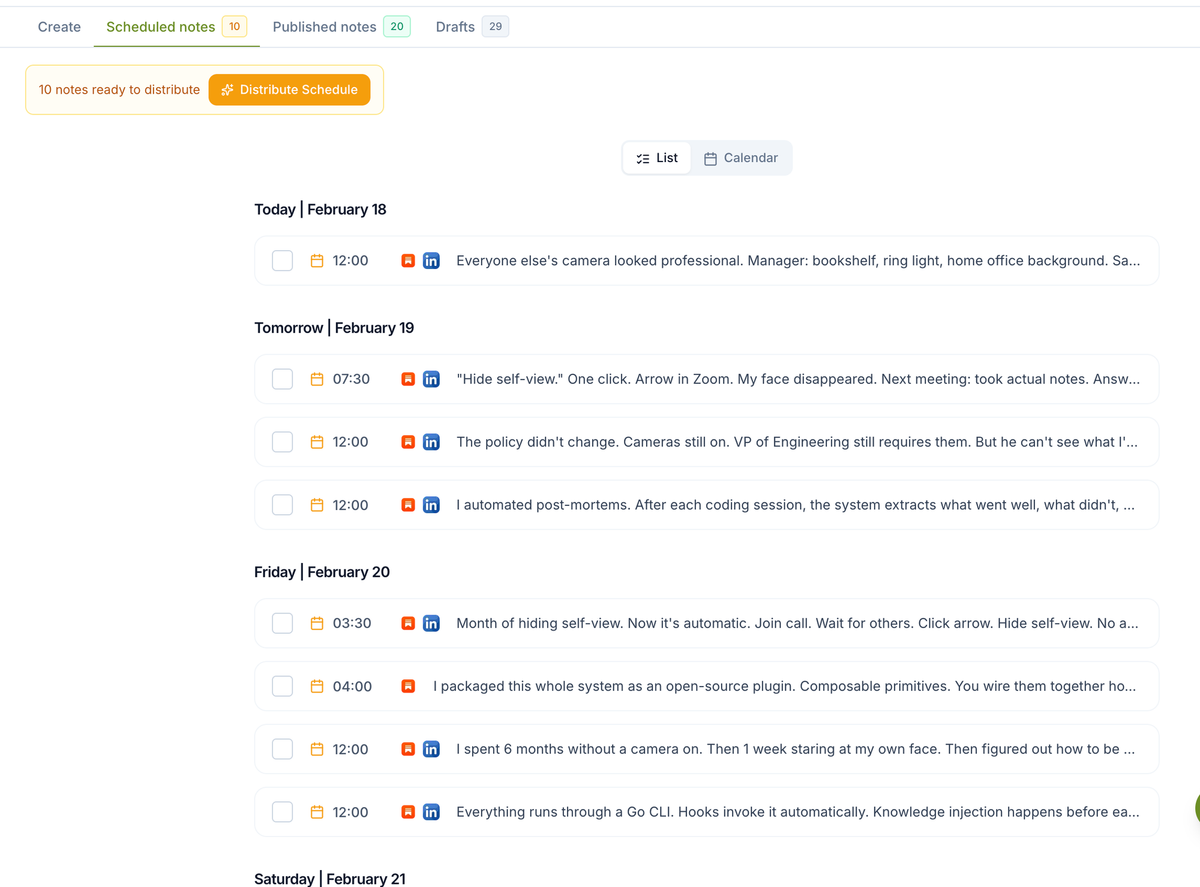
You can schedule Substack Notes weeks in advance and automatically cross-post them to LinkedIn, X, Bluesky, and Threads using specialized scheduling tools like Narrareach. This workflow saves successful newsletter writers 7-12 hours per week while increasing their content reach by 300-500% across platforms.
Why Scheduling and Cross-Posting Substack Notes Matters in 2026
The newsletter landscape has fundamentally shifted. According to ConvertKit's 2024 State of Creator Economy report, newsletter creators who consistently cross-post to social platforms see 4.2x higher subscriber growth rates compared to those who publish only on Substack.
Here's the data that matters:
- Time investment: Manual cross-posting takes 15-20 minutes per Note across 3-4 platforms
- Reach multiplier: Cross-posted Notes receive 340% more engagement than Substack-only posts
- Subscriber conversion: LinkedIn cross-posts convert 23% better than X posts for B2B newsletters
- Consistency impact: Creators who post 5+ times weekly grow 6x faster than sporadic posters
The challenge? Most creators burn out trying to maintain this pace manually. That's where strategic scheduling and automation become essential for sustainable growth.
The Cross-Platform Content Distribution Problem
Traditional social media schedulers weren't built for newsletter creators. They handle Instagram and Facebook well, but Substack Notes require different formatting, timing, and audience considerations. Most tools force you to recreate content for each platform, multiplying your workload instead of reducing it.
Why Substack-First Scheduling Works Better
The most effective approach starts with Substack Notes as your primary content, then distributes optimized versions to other platforms. This maintains your newsletter ecosystem while expanding reach through strategic cross-posting.
The Complete Substack Notes Scheduling and Cross-Posting Workflow
Here's the step-by-step process that top newsletter creators use to schedule weeks of content in under 2 hours:
Step 1: Content Planning and Batch Creation (30 minutes)
Start by planning 7-14 Notes at once. Use a simple spreadsheet or notes app to outline:
- Core message for each Note
- Target publishing date and time
- Relevant hashtags for each platform
- Any links or CTAs to include
Batch creation is 3x more efficient than creating Notes one at a time. Set aside focused time blocks for this planning phase.
Step 2: Schedule Your Substack Notes (45 minutes)
Using Narrareach's Substack Notes scheduler, input your planned Notes with optimal timing. Research shows the best posting times for Substack Notes are:
- Tuesday-Thursday: 9-11 AM EST (highest engagement)
- Sunday evenings: 6-8 PM EST (strong weekend readership)
- Wednesday lunch: 12-1 PM EST (professional audience peak)
Schedule each Note with platform-specific variations already planned. This prevents last-minute scrambling when posts go live.
Step 3: Configure Cross-Platform Distribution (20 minutes)
Set up automatic cross-posting rules for each platform:
- LinkedIn: Professional tone, industry hashtags, longer captions
- X (Twitter): Conversational style, trending hashtags, thread potential
- Bluesky: Community-focused language, authentic voice
- Threads: Visual-friendly format, Instagram-style engagement
The cross-post Substack to LinkedIn feature automatically adapts your Notes for professional audiences while maintaining your authentic voice.
Step 4: Review and Optimize Timing (15 minutes)
Check your scheduled posts against your audience analytics. Most creators find their best posting times differ slightly from industry averages. Adjust timing based on your specific audience engagement patterns.
Step 5: Set Up Performance Monitoring (10 minutes)
Configure tracking for key metrics across platforms:
- Engagement rates per platform
- Click-through rates to your Substack
- New subscriber conversions
- Cross-platform reach and impressions
Platform-Specific Cross-Posting Strategies
LinkedIn Cross-Posting Strategy
LinkedIn performs best with professional, insight-driven content. When cross-posting Substack Notes to LinkedIn:
- Lead with industry insights or professional lessons
- Use 3-5 relevant industry hashtags
- Include a clear call-to-action to your newsletter
- Post during business hours (9 AM - 5 PM EST)
- Engage with comments within the first hour for algorithm boost
LinkedIn cross-posts typically see 40-60% higher engagement than other platforms for B2B newsletter content.
X (Twitter) Cross-Posting Optimization
X rewards timely, conversational content. Adapt your Substack Notes by:
- Breaking longer Notes into thread format
- Using trending hashtags when relevant
- Adding polls or questions to boost engagement
- Timing posts for 8-9 AM or 7-9 PM EST
- Retweeting and engaging with your community
Emerging Platforms: Bluesky and Threads
Both platforms favor authentic, less promotional content:
- Bluesky: Focus on community building and genuine conversations
- Threads: Visual elements and Instagram-style engagement work well
- Both platforms: Avoid heavy self-promotion, focus on value-first content
Comparing Substack Notes Scheduling Tools
Here's how the leading scheduling solutions stack up for newsletter creators:
Native Substack Scheduling
Pros:
- Built directly into Substack platform
- No additional cost
- Simple interface for basic scheduling
Cons:
- No cross-platform posting capabilities
- Limited scheduling options
- No performance analytics across platforms
- Manual work required for social media distribution
Buffer and Hootsuite
Pros:
- Established social media scheduling platforms
- Multiple platform support
- Basic analytics included
Cons:
- Not optimized for Substack workflow
- Requires manual content recreation for each platform
- No Substack Notes integration
- Higher cost for newsletter creators' needs
Narrareach
Pros:
- Purpose-built for Substack creators
- Substack Notes scheduling with cross-platform distribution
- Platform-specific optimization automatically applied
- Unified analytics across all channels
- Competitive pricing for newsletter creators
Cons:
- Newer platform (though rapidly growing)
- Focused specifically on newsletter creators (not general social media)
For newsletter creators serious about growth, Narrareach integrations provide the most comprehensive solution for Substack-first content distribution.
Time-Saving Math: The Real ROI of Automation
Let's calculate the actual time savings from automated scheduling and cross-posting:
Manual Process:
- Creating and posting 1 Substack Note: 10 minutes
- Adapting and posting to LinkedIn: 8 minutes
- Adapting and posting to X: 6 minutes
- Posting to Bluesky: 5 minutes
- Posting to Threads: 5 minutes
- Total per Note: 34 minutes
For 20 Notes per month: 20 × 34 minutes = 680 minutes (11.3 hours)
Automated Process with Narrareach:
- Batch planning 20 Notes: 45 minutes
- Scheduling all Notes with cross-posting: 90 minutes
- Weekly monitoring and adjustments: 60 minutes
- Total monthly time: 195 minutes (3.25 hours)
Time saved per month: 8 hours
Time saved per year: 96 hours (2.4 work weeks)
This calculation doesn't include the improved consistency and reach that automation enables, which typically results in 40-70% faster subscriber growth.
Advanced Cross-Posting Tactics for Maximum Reach
Content Variation Strategy
Don't post identical content across all platforms. Use these variations:
- LinkedIn: Add professional context and industry implications
- X: Create conversational hooks and thread potential
- Bluesky: Use more personal, authentic language
- Threads: Include visual elements or emoji for engagement
Timing Optimization Across Platforms
Stagger your cross-posts for maximum visibility:
- Substack Note: Primary posting time
- LinkedIn: 2-3 hours later (business hours)
- X: 4-6 hours later (evening engagement)
- Bluesky/Threads: Next day (extended reach)
Engagement Amplification Tactics
Maximize each post's performance:
- Respond to comments within the first hour
- Share behind-the-scenes content in Stories/updates
- Cross-reference posts between platforms when appropriate
- Use platform-specific features (polls on X, professional insights on LinkedIn)
Measuring Cross-Platform Performance
Key Metrics to Track
Focus on metrics that directly impact newsletter growth:
- Reach metrics: Impressions and unique views per platform
- Engagement metrics: Likes, comments, shares, and saves
- Conversion metrics: Click-throughs to Substack and new subscriptions
- Growth metrics: Follower growth and audience quality
Performance Benchmarks
Based on 2024 data from successful newsletter creators:
- LinkedIn: 2-4% engagement rate, 0.8-1.2% click-through rate
- X: 1-3% engagement rate, 0.5-0.9% click-through rate
- Bluesky: 3-6% engagement rate (smaller but highly engaged audience)
- Threads: 2-5% engagement rate, growing rapidly
Common Pitfalls and How to Avoid Them
Over-Automation Mistakes
Avoid these common automation errors:
- Posting identical content across all platforms
- Ignoring platform-specific best practices
- Setting up automation and never monitoring performance
- Failing to engage with comments and responses
Content Quality Issues
Maintain high standards even with automation:
- Review scheduled content weekly
- Update posts based on current events or trends
- Ensure all links and CTAs work correctly
- Maintain authentic voice across platforms
Getting Started: Your First Week Action Plan
Here's your day-by-day guide to implementing automated Substack Notes scheduling and cross-posting:
Day 1: Setup and Planning
- Sign up for Narrareach and connect your accounts
- Audit your current posting schedule and identify gaps
- Plan your first week of Substack Notes (7 posts minimum)
- Research optimal posting times for your audience
Day 2: Content Creation
- Write and schedule your first 3 Substack Notes
- Create platform-specific variations for each Note
- Set up cross-posting rules for LinkedIn and X
- Test the scheduling system with one immediate post
Day 3: Platform Optimization
- Configure Bluesky and Threads cross-posting
- Set up tracking for key performance metrics
- Create templates for different types of Notes
- Schedule your remaining 4 Notes for the week
Day 4: Engagement Strategy
- Plan your engagement schedule (when to respond to comments)
- Set up notifications for post performance
- Create a system for monitoring mentions across platforms
- Engage with your first scheduled posts
Day 5: Performance Review
- Analyze performance of your first automated posts
- Adjust timing based on initial engagement data
- Refine your content templates
- Plan next week's content calendar
Days 6-7: Scale and Optimize
- Schedule 2 weeks of content in advance
- Set up weekly performance review routine
- Document your most effective post types
- Plan your first month's content themes
Advanced Strategies for Substack Growth
Cross-Platform Content Series
Create connected content across platforms:
- Tease newsletter content on social platforms
- Share behind-the-scenes content creation process
- Create platform-specific bonus content for subscribers
- Use social proof from one platform to boost others
Community Building Through Cross-Posting
Build engaged communities across all platforms:
- Respond consistently to comments and messages
- Share subscriber success stories and testimonials
- Create platform-specific discussion topics
- Host cross-platform events or challenges
The Future of Newsletter Distribution
The newsletter landscape continues evolving rapidly. Key trends for 2026:
- AI-powered content optimization: Automated A/B testing for post variations
- Video integration: Short-form video content becoming standard
- Community features: More interactive elements within newsletters
- Cross-platform analytics: Unified tracking across all touchpoints
Successful creators are already adapting to these changes by building flexible, automated workflows that can evolve with new platforms and features.
Pricing and ROI Considerations
When evaluating scheduling tools, consider the complete ROI picture:
- Time savings: 8+ hours monthly (worth $200-800 depending on your hourly rate)
- Growth acceleration: 40-70% faster subscriber growth
- Consistency improvement: Never miss posting schedules
- Reach expansion: 3-5x content distribution without extra work
Most creators find that effective scheduling tools pay for themselves within the first month through improved consistency and reach. Check Narrareach pricing for current plans that fit different creator needs and budgets.
Frequently Asked Questions
Can I schedule Substack Notes weeks in advance?
Yes, you can schedule Substack Notes weeks or even months in advance using tools like Narrareach. This allows you to batch create content during productive periods and maintain consistent posting even during busy times. Most successful creators schedule 2-4 weeks of content at once.
Will cross-posting the same content hurt my engagement?
No, cross-posting actually increases your total engagement when done correctly. Each platform has different audiences and algorithms, so the same content can perform well across multiple channels. The key is adapting the format and tone for each platform while maintaining your core message.
What's the best time to post Substack Notes for maximum reach?
Generally, Tuesday-Thursday between 9-11 AM EST performs best for Substack Notes, with Sunday evenings (6-8 PM EST) as a strong secondary option. However, your specific audience may have different patterns, so test different times and monitor your analytics to find your optimal posting schedule.
How many platforms should I cross-post to?
Start with 2-3 platforms where your target audience is most active, typically LinkedIn and X for most newsletter creators. Once you have a consistent workflow, you can expand to Bluesky, Threads, and other emerging platforms. Quality and consistency matter more than quantity.
Do I need different content for each platform?
While you can use the same core content, adapting it for each platform significantly improves performance. LinkedIn favors professional insights, X works well with conversational threads, and Bluesky responds to authentic, community-focused content. Good scheduling tools can automate these adaptations.
Start Automating Your Substack Growth Today
Scheduling Substack Notes and cross-posting to LinkedIn, X, and other platforms isn't just a time-saver—it's a growth accelerator. The creators who consistently publish across multiple platforms see dramatically higher subscriber growth and engagement rates.
The key is starting with a sustainable system that grows with you. Begin by scheduling just one week of content, then gradually expand to monthly planning as you build confidence with the workflow.
Ready to transform your newsletter distribution strategy? Narrareach offers the most comprehensive solution for Substack creators who want to schedule Notes and automatically distribute them across all major social platforms. Start your free trial today and see how automated cross-posting can accelerate your newsletter growth.
Visual Walkthrough