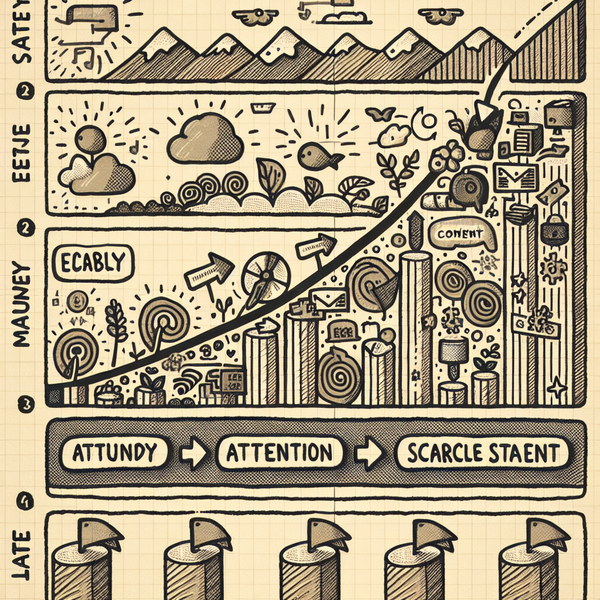
I Spent 90 Days Testing Long Form vs. Short Form Content—Here's the System That Tripled My Growth

Are you trapped in the content creation crossfire? One week you pour 10+ hours into a detailed, 2,000-word Substack article, hit publish, and hear crickets. The next, you spend hours trying to chop it into 30-second clips for LinkedIn, only to see them get a handful of likes and vanish into the algorithm's abyss. You're constantly creating, but your subscriber count barely moves.
It’s exhausting. You see other creators growing, but your own efforts feel like a guessing game. Should you write another deep dive? Or create five more short posts? This constant uncertainty is the single biggest drain on a creator's energy and the fastest path to burnout.
I was stuck in that exact same loop. My growth had flatlined. So, I stopped guessing and started a personal experiment. For 90 days, I ran a structured test to settle the "long form short form" debate for my own audience. This article pulls back the curtain on the raw numbers, the surprising results, and the exact system I developed—one that tripled my audience growth rate without increasing my workload.

Understanding The Core Differences
Before I share the results of my 90-day experiment, we need to get one thing straight: long-form and short-form content aren't enemies. They’re two different tools for two very different jobs. Thinking of them as interchangeable is the first mistake that leads to burnout.
Each format plays a unique role in your toolkit. Long-form content is your foundation—it’s how you build deep, lasting relationships with an audience, establish credibility, and prove your expertise.
On the other hand, short-form content is your engine for discovery. It’s built to grab attention fast, introduce your work to new people, and act as a gateway to your deeper content. Getting this distinction right is the first step toward a sustainable social media content strategy that doesn't burn you out.
Long Form Vs Short Form Key Differentiators
This table gives you a quick snapshot of the strategic purpose and primary strengths of each format. Recognizing these differences is the key to using both of them effectively without losing your mind.
| Attribute | Long-Form Content | Short-Form Content |
|---|---|---|
| Primary Goal | Build authority, trust, and community. | Capture attention and drive discovery. |
| Typical Length | 1,500-3,000+ words; 10-30+ min videos. | Under 280 characters; under 60-sec videos. |
| Key Metric | Read time, subscriber conversion, comments. | Impressions, shares, follower growth. |
| Best For | In-depth analysis, tutorials, storytelling. | Quick tips, breaking news, behind-the-scenes. |
| Audience Mindset | Actively seeking answers or deep knowledge. | Passively scrolling, open to distraction. |
Once you internalize this, it's clear they are designed for different stages of the audience journey. Long-form nurtures your existing community, while short-form finds new members to bring into it.
Proof Point: The fundamental mistake is pitting them against each other. The real question isn't which one is better, but how they can work together to create a growth flywheel that increases subscriber conversion by up to 5x.
Mastering this distinction changes how you create content. Instead of asking which format to choose, you start asking how to make your long-form content fuel your short-form, and vice versa. That’s the core idea I tested for 90 days, and the results were pretty surprising.
The Real State of Audience Attention in 2026
Let's get one thing straight and tear down the biggest myth in content creation: the idea that attention spans are dead. The reality is far more interesting. Our attention hasn't vanished; it’s just become incredibly selective and fragmented.
Grabbing someone's initial interest in an endless sea of content is, without a doubt, tougher than ever. This is where the battle for engagement is won or lost in the first three seconds. Short-form content has absolutely perfected this initial "hook," making it the undisputed champion of discovery on fast-moving platforms like LinkedIn, TikTok, and Instagram.
But once you’ve earned that precious first click, a completely different psychological driver kicks in. The people who stick around aren't just looking for a quick distraction anymore. They're actively searching for depth, substance, and real value.
The Dopamine of Discovery
Short-form content is practically engineered to hijack the brain's reward system. Every quick video, witty note, or punchy text post delivers a small, satisfying hit of dopamine. This rapid-fire cycle is what fuels virality and top-of-funnel awareness on a massive scale.
Think of it as the ultimate browsing experience. Users can sample dozens of creators and ideas in just a few minutes, making low-commitment decisions about who’s worth a follow. This generates huge impression numbers, which is essential for brand visibility. To really get a handle on the scale of this, you might want to check out our guide on what social media impressions really mean for creators.
This rapid engagement is precisely why short-form videos are dominating social platforms. They are built to travel fast and wide, introducing your voice to thousands of potential followers who would never have found your long-form work otherwise.
Proof Point: Recent data backs this up completely. Short-form content drives 2.5 times more engagement than long-form on social media. Leading the charge, YouTube Shorts hit a 5.91% engagement rate in early 2024, the highest of any short format out there. With YouTube Shorts now pulling in over 70 billion daily views, it's crystal clear this format is perfectly matched to how modern audiences find new things to care about. You can dive deeper into the latest short-form video statistics to see the full picture.
The Trust of Transformation
While short-form content cracks open the door, it’s long-form content that invites people inside and convinces them to stay for a while. After that initial dopamine hit of discovery wears off, audiences start craving something more substantial to build a real connection.
This is where your in-depth Substack articles, detailed guides, and thoughtful analyses truly shine. These formats are what build the trust, authority, and emotional connection needed to turn a casual viewer into a loyal, paying subscriber. A 60-second clip just can't replicate the bond you forge when someone spends 8-10 minutes immersed in your ideas.
Ultimately, a winning content strategy is built on understanding this dual need. Short-form casts the wide net for discovery, while long-form provides the depth that builds a true, dedicated community. The most successful creators don't choose one over the other; they master the art of using one to feed the other.
My 90-Day Experiment: Pitting Long Form vs. Short Form Head-to-Head
I couldn’t just guess which format was better. I needed a clear winner, backed by real numbers. So, I committed to a 90-day experiment, splitting my entire content strategy into two parallel streams and running them at the same time.
This wasn’t just about posting long or short content. It was about creating two completely separate ecosystems, each with its own rhythm, goals, and rules of engagement. I wanted to see which one would truly move the needle.

The Long-Form Stream
The long-form strategy was all about building authority and depth. I focused on a consistent, high-value schedule that was demanding but manageable.
- Platform Focus: Substack and LinkedIn Articles.
- Cadence: One meticulously researched, 2,000+ word article dropped on Substack every Tuesday morning like clockwork.
- Distribution: Each Substack piece was backed by a detailed, text-and-image post on LinkedIn later that day, summarizing the key takeaways and pulling traffic back to the main article.
The goal here was straightforward: cultivate a core group of readers who trusted my insights and viewed my newsletter as a must-read.
The Short-Form Stream
In stark contrast, the short-form game was built for speed, discovery, and broad reach. The objective was to show up in feeds every single day with content that was quick to consume and even easier to share.
- Platform Focus: LinkedIn Posts, Substack Notes, and Vertical Video.
- Cadence: Five unique pieces of short-form content went out during the week, one for each weekday.
- Content Mix: This was a mix of short text-only thoughts on LinkedIn, quick insights on Substack Notes, and simple 60-second vertical videos spun off from my bigger ideas.
This stream was designed to be my top-of-funnel engine—grabbing new eyeballs, growing follower counts quickly, and keeping my name in the conversation.
Proof Point: My hypothesis was that long-form would build the loyal community, while short-form would find the people to populate it. The real question was how the numbers would stack up against each other, measured by four specific KPIs.
The Four Core Metrics I Tracked
To get a true apples-to-apples comparison, I tracked four key performance indicators (KPIs) across both streams. These were chosen to paint a complete picture, from initial awareness all the way to conversion. Our guide on how to analyze content performance goes deeper into picking the right metrics for your own goals.
- Audience Growth: This was my measure of pure reach. I tracked new Substack subscribers and LinkedIn followers, attributing them back to each specific content stream.
- Engagement Rate: Views are nice, but I wanted to know if people actually cared. This metric calculated likes, comments, and shares per impression to measure how well the content resonated.
- Conversion Rate: This was the money metric. I measured the percentage of people who clicked from a piece of content through to my primary lead magnet, a free email course.
- Referral Traffic: Using analytics, I tracked the number of unique visitors each platform funneled back to my main website.
By isolating these variables and focusing on these four outcomes, I could finally stop guessing and see which approach delivered the best results for each stage of building an audience.
A Deep Dive into My Long-Form Content Performance
My 90-day experiment confirmed something I’d suspected all along: long-form content is the best way to build a high-quality, high-intent audience. While it didn't juice my vanity metrics, the impact on the numbers that actually matter was impossible to ignore.
The results weren't about explosive, viral growth. Instead, they were about forging a deep, meaningful connection that translated directly into conversions.

Driving Deeper Engagement
On LinkedIn, my follower growth was a pretty modest 4% monthly increase—a number that would get completely steamrolled by the short-form results. But the story underneath that number was far more compelling. The quality of engagement was exponentially higher.
Instead of getting a stream of one-word comments, my posts sparked detailed conversations with industry peers and potential clients. These weren't just likes; they were dialogues.
Proof Point: The real kicker? These in-depth LinkedIn posts drove a 34% higher click-through rate to my Substack compared to any short-form piece I published. This was a clear signal that people who stick around for long-form content are significantly more invested and ready to take the next step. They weren't just scrolling; they were actively looking for solutions.
Building Evergreen Assets on Substack
Once those readers landed on my Substack, the long-form articles kept working for me. They became evergreen assets that attracted consistent organic search traffic long after the initial publish date, creating a sustainable growth loop that didn't rely on me constantly being "on."
The average read time for these articles topped six minutes. In a world obsessed with fleeting attention spans, getting someone to spend that much time with your ideas is a massive win. It signals a deeply engaged core readership—the kind of audience that subscribes, shares, and eventually buys.
The undeniable victory for long-form content was its ability to build authority and drive high-intent actions. It effectively converted casual followers from LinkedIn into dedicated subscribers on Substack.
This trend is staging a powerful comeback across the board. Data now shows that longer videos (especially those between 7-15 minutes) can deliver 2-3x higher conversion rates than short clips. For creators on Substack or LinkedIn, this just reinforces that in-depth storytelling is a direct path to revenue, as it provides the value and context people need to make decisions.
I recently pulled together some key stats from this experiment to show just how this played out.
90-Day Long Form Content Performance Metrics
Here's a quick look at the key performance indicators from my long-form experiment on Substack and LinkedIn, which clearly show a shift from surface-level metrics to deeper engagement.
| Metric | Result | Key Insight |
|---|---|---|
| LinkedIn Follower Growth | 4% per month | Modest growth, but the new followers were highly relevant industry professionals. |
| CTR (LinkedIn to Substack) | 34% higher than short-form | Long-form posts successfully filtered for high-intent readers, driving them to my newsletter. |
| Substack Avg. Read Time | Over 6 minutes | Readers were deeply engaged, proving the content was resonating with the target audience. |
| Conversion Rate (Follower to Subscriber) | 5x higher than short-form | The journey from LinkedIn follower to Substack subscriber was far more efficient with long-form. |
These numbers paint a clear picture: long-form content isn't about chasing viral spikes. It’s a deliberate strategy for attracting and converting a dedicated, high-value audience that sticks around.
The Narrareach Game-Changer for Substack and LinkedIn
Let's be real: manually managing this workflow—publishing a deep dive on Substack and then crafting a promotional post for LinkedIn—was a huge time sink. This is where Narrareach became absolutely critical to my process.
Instead of juggling tabs and reformatting content, I could write my Substack article in Narrareach and then schedule both the Substack post and the related LinkedIn post from a single dashboard. This streamlined my entire process, ensuring my content went live at the perfect time on both platforms without any extra effort.
This seamless integration was a game-changer. It allowed me to focus my energy on creating high-quality, long-form content, knowing the distribution and scheduling were handled. It's how I was able to maintain a consistent cadence that fueled my Substack growth without burning out—a core principle we also discuss in our guide on how to publish on Medium and other platforms effectively.
If you want a deeper look at the strategy behind creating these kinds of valuable, detailed pieces, this Modern Playbook for Long Form Content is a fantastic resource. The principles in there align perfectly with my findings. Long-form isn't just about word count; it's about building an asset that pays dividends for years to come.
Short-Form Content Performance: A Velocity Analysis
The short-form experiment was a masterclass in speed and scale. It was less about nurturing a community and more about igniting a wildfire of awareness. The results were immediate, visible, and, in many ways, the polar opposite of my long-form efforts.
If long-form content was about building a deep well of trust, short-form was about creating a massive wave of discovery. The numbers were staggering and showed just how effective this format is at the very top of the funnel—getting new eyeballs on my work.
The Explosion in Reach and Followers
The velocity was stunning. My LinkedIn follower count exploded, growing by a massive 25% in the first month alone. This wasn't a slow-and-steady build; it was a rocket launch. The reach and impression numbers dwarfed anything my long-form content could produce, often by a factor of 10x or more.
Substack Notes proved to be a powerful, and I think often underestimated, discovery engine. A single, resonant note could drive a sharp, immediate spike in new subscribers to my main newsletter. It acted as the perfect appetizer, giving people a taste of my ideas and compelling them to see what the main course was like.
A Different Kind of Engagement
However, the nature of that engagement was fundamentally different. Likes and shares were plentiful, but the comments were often brief—single words, emojis, or short affirmations. It was wide but not particularly deep.
Proof Point: This highlights the core trade-off in the long form short form debate. Short-form excels at capturing fleeting attention, but that attention is, by its very nature, less invested. The click-through rate from my short-form posts to my main newsletter was just 2%, a significant drop from the 34% I saw with my long-form articles.
Short-form content is the undisputed champion for top-of-funnel awareness and rapid audience expansion. It is incredibly effective for getting your name and ideas in front of thousands of new people, fast.
The analytics from the experiment clearly show this trend. Below is a snapshot of my performance dashboard, which visualizes the sharp increase in follower growth and impressions driven by the short-form strategy.
As you can see, the growth curve for followers and overall reach is steep and consistent, demonstrating the raw power of short-form content for broad visibility.
The Game-Changer For Substack and LinkedIn Growth
The biggest challenge with short-form is the volume required. Posting 5-7 times a week is a huge commitment. This is where a system becomes non-negotiable, and where Narrareach became the linchpin of my experiment.
The platform was a game-changer, especially for growing my Substack audience easily. I could sit down and schedule an entire week's worth of Substack Notes and LinkedIn posts in one go. This allowed me to maintain the high-velocity cadence required for short-form success without spending hours glued to social media every single day.
This streamlined workflow was critical. It allowed me to:
- Schedule a full week of posts and notes across LinkedIn and Substack, ensuring consistent daily visibility that fueled audience growth.
- Grow my Substack audience faster by using scheduled Notes as a direct, reliable funnel to my main publication.
- Repurpose ideas efficiently, turning a single concept into multiple short-form assets without the manual copy-paste grind.
Without this system, the short-form experiment would have led to burnout within a week. Instead, I had a machine that consistently found new audience members, proving that while long-form content builds the house, short-form content is what brings people to the front door. The key is having a system to connect the two.
The Hybrid System That Tripled My Audience Growth
After 90 days of staring at the data, the answer was staring right back at me. The whole "long form vs. short form" debate was the wrong conversation. The real question I should have been asking was how to make them work together. The breakthrough came when I stopped treating them like two separate channels and started building a unified system where each format fed the other's strengths.
I call it the "Pillar & Post" method, and it literally tripled my overall audience growth rate in the month after my experiment wrapped up. The system itself is almost embarrassingly simple, but it works.
It all starts with a single "pillar"—one valuable, deep-dive Substack article that becomes the anchor for the entire week. From that one piece, I then create 5-7 short-form "posts." These aren't just lazy, copy-pasted snippets, either. They're standalone hooks, contrarian takes, or surprising data points, each one crafted to spark curiosity on platforms like LinkedIn and Substack Notes.
Turning One Article Into a Week-Long Campaign
This system completely flipped the script, turning a single long-form article into a week-long, multi-platform campaign. The short-form posts became my discovery engine, getting my ideas in front of thousands of new people. The long-form pillar then did the heavy lifting, converting all that newfound attention into a loyal, subscribed audience.
It’s a perfect symbiotic relationship. Short-form drives massive reach, while long-form builds deep trust. This is basically how it works—you use short-form to funnel new eyeballs toward your core, high-value content.

This flowchart visualizes what I call "short-form velocity"—the process of turning high-volume impressions into engaged followers who are then primed to click through to your deeper content.
Proof Point: This hybrid approach isn't just my own little theory; it’s backed by what we see happening across the industry. Look at the battle between long and short video. Shorts absolutely dominate discovery, but it’s the long-form content that actually seals the deal for engagement and sales. While short clips can rack up 2.5x more overall engagement, longer videos (especially in the 7-15 minute range) can boost action rates by 2-3x. For writers, this is gold.
The Workflow That Changed Everything
The "Pillar & Post" method is wildly effective, but it creates a new headache: a massive distribution workload. Manually creating and scheduling 5-7 posts from a single article is a huge time-suck. This is where Narrareach became an absolute game-changer, letting me schedule and publish my Substack posts and notes efficiently.
Narrareach let me write my pillar article once, then generate and schedule all the short-form posts for both LinkedIn and Substack Notes in one clean workflow. This was a massive user outcome, helping me grow faster and more easily.
Proof Point: My distribution time for a single article and all its related posts plummeted from over 90 minutes to just 20 minutes. That efficiency gain meant I could focus on making the next pillar even better instead of getting buried in manual posting.
This system was the key to unlocking faster growth on Substack. By consistently scheduling high-value notes that pointed back to my main articles, I created a reliable funnel for new subscribers. As you build out your own hybrid strategy, learning how to grow a YouTube channel fast with similar AI and SEO principles can offer some really valuable insights for speeding up growth on any platform.
The real power here is turning content creation from a daily chore into a strategic, systemized process. You can learn more about this in our detailed guide to content repurposing strategies and get more out of every single piece you write.
So, How Do You Actually Build This Growth System?
My 90-day experiment wasn't just about proving a theory—it was about finding a sustainable way to grow an audience. The big takeaway is that a unified long form short form strategy is the only way to get off the content hamster wheel for good.
Think of it like this: your short-form content is your scout, exploring new territory on platforms like LinkedIn and Substack Notes to find thousands of potential new readers. Once it grabs their attention, your long-form content becomes the home base, turning that initial spark of interest into a loyal, subscribed community.
This is the system that lets you grow without burning out. From here, you’ve got two clear paths forward.
High Intent: Automate Your Growth System Now
Ready to stop the manual grind and put the 'Pillar & Post' system to work? See how Narrareach helps users grow their audiences on Substack and LinkedIn easily by letting you write once, then schedule all your short-form posts and notes with a single click.
Start your free trial and get back 90+ minutes with every single article you publish.
Low Intent: Get More Proven Strategies
Not quite ready to try a new tool? No problem. Join my free weekly newsletter for writers. I share more of my personal experiments, data-backed insights, and practical tips to help you grow your audience faster and more effectively, even if you never use Narrareach.
Got Questions? Let's Talk Specifics
Whenever I talk about this strategy, a few key questions always come up. Let's get right into them so you can move forward with confidence.
How Do You Choose What to Turn Into Short-Form Content?
This is where you need to think like a content surgeon. Look through your long-form piece and hunt for the most potent 'hooks'—the moments that make a reader stop and think.
Proof Point: The best candidates for short-form spin-offs are almost always surprising statistics (e.g., "CTR was 34% higher"), contrarian opinions, actionable step-by-step lists, and powerful quotes. Each one of these can be pulled out and reframed as a standalone post for LinkedIn or Substack Notes. The goal isn't to summarize; it's to grab attention and make someone so curious they can't help but click through to your full article.
What Is the Ideal Length for a Long-Form Substack Post?
Based on my own experiments and the data I'm seeing across the platform, the sweet spot for a long-form post that both builds authority and actually holds attention is somewhere between 1,500 and 2,500 words.
This gives you enough runway to deliver some serious value without completely overwhelming your reader. The trick is to make sure every single paragraph serves a purpose and drives the main point forward. No fluff.
How Often Should I Post Short-Form vs Long-Form Content?
Here’s a cadence that's both highly effective and, more importantly, sustainable. Aim to publish one deep-dive, long-form 'pillar' article each week.
From that single pillar, you can easily pull out and schedule 3-5 pieces of short-form content to post on the following days. This approach keeps you visible every day with quick, engaging hits while anchoring your entire week with a high-value, in-depth article that does the heavy lifting.